
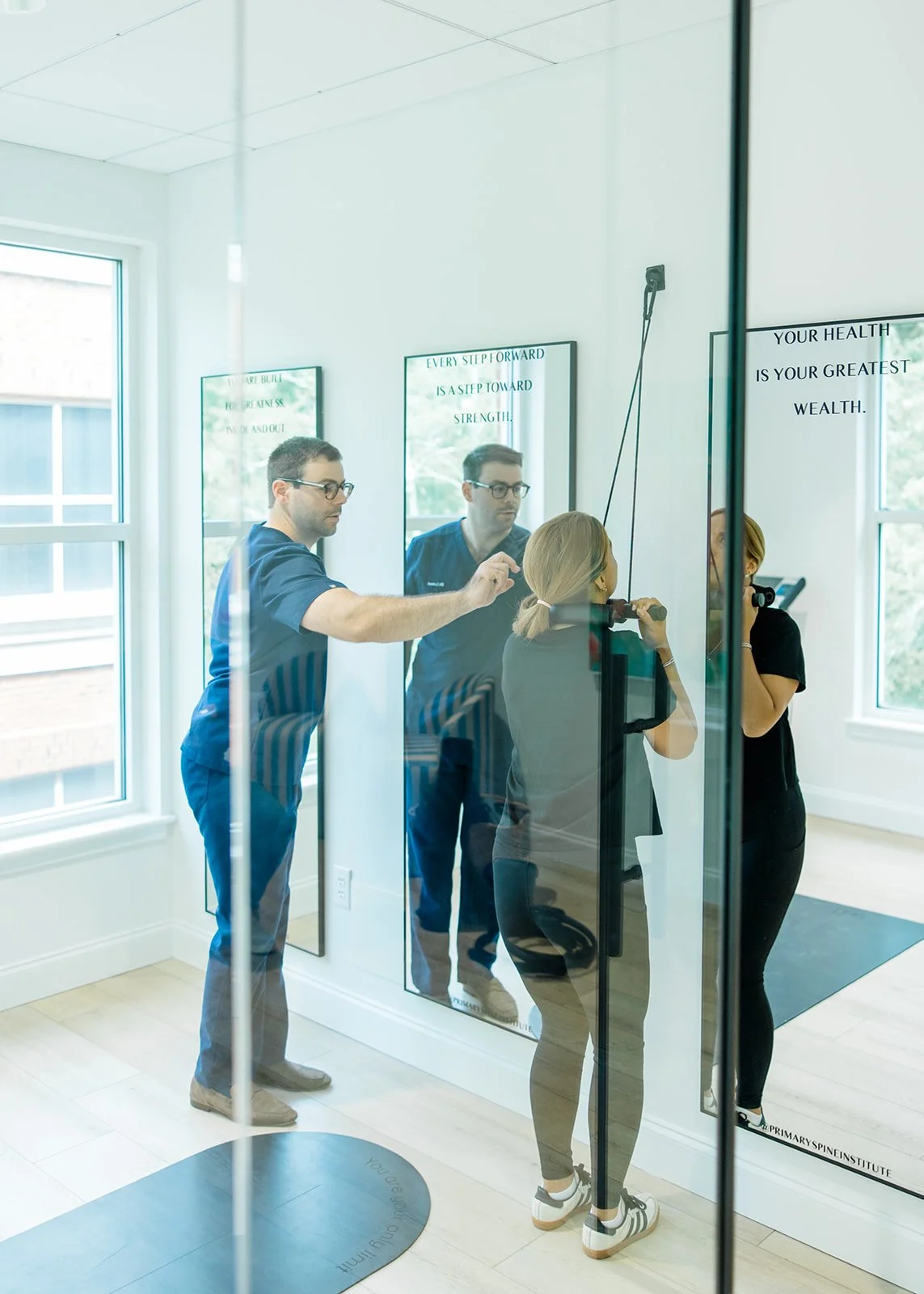
Poor posture isn't just how you look. It's why you hurt.
Most people think of posture as a cosmetic issue, something to fix so they stand up straighter in photos. But posture is structural. When your spine shifts out of its ideal alignment, every system in your body feels it. Nerves get compressed. Discs load unevenly. Muscles overwork to compensate. And over time, what started as a stiff neck or an aching lower back becomes chronic pain that follows you everywhere.
Posture correction isn't about standing up straight. It's about restoring the structure that makes everything else work.
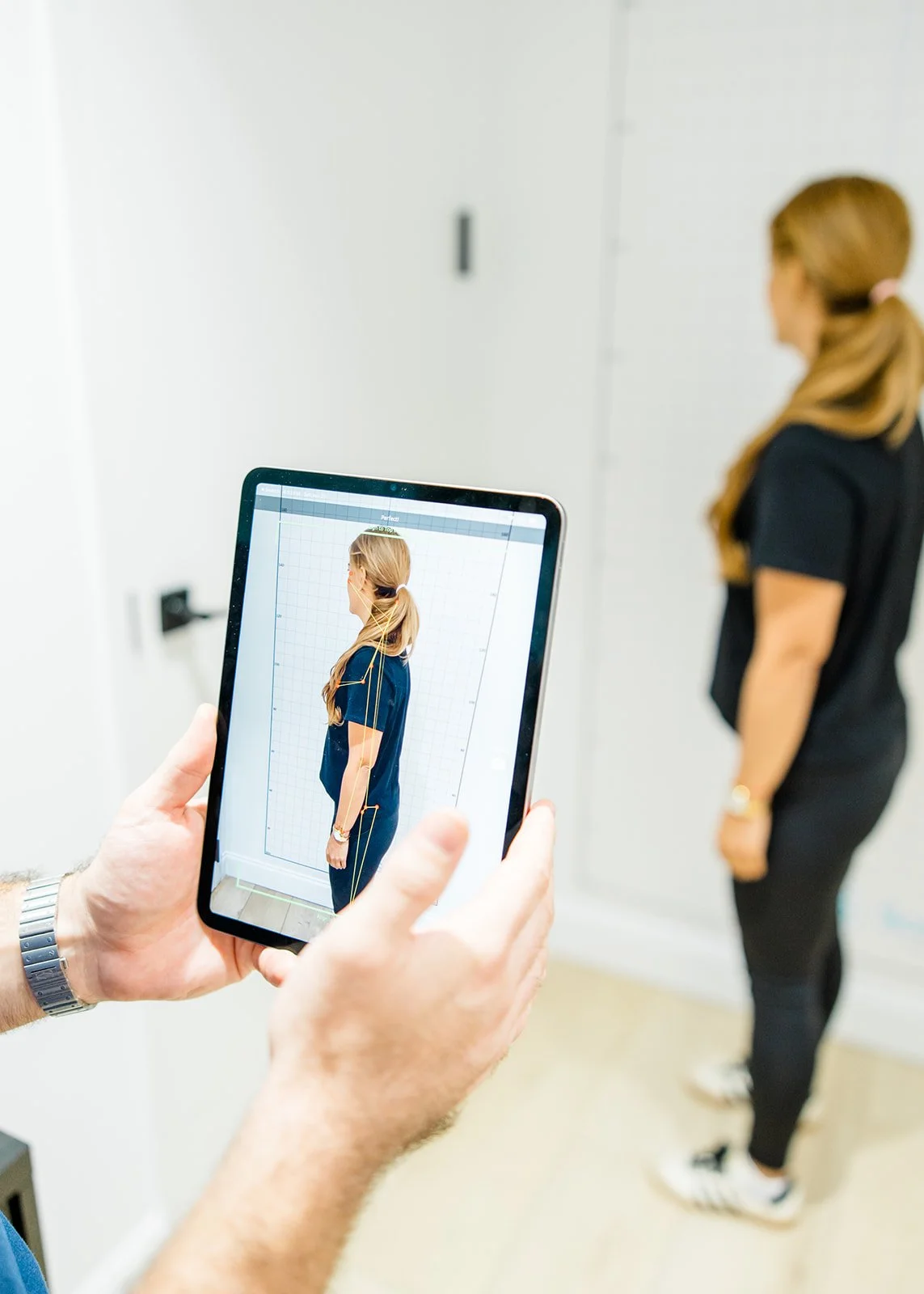
We analyze everything in your spine
Why Posture Matters More Than You Think
Your spine houses your nervous system. When the structure is off, the signals are too.
The spine is the central highway between your brain and your body. When postural imbalances compress that highway through forward head position, loss of cervical curve, scoliosis, or pelvic tilt, the effects ripple outward in ways most people never connect back to their spine.
Chronic headaches. Fatigue that won't lift. Shoulder pain that doesn't respond to massage. Numbness in your hands. Difficulty breathing deeply. Brain fog. These aren't separate problems. They're often one problem; a spine that's been carrying the wrong load for too long.
The good news: structure can be corrected. And when it is, the symptoms that seemed unrelated often resolve along with it.
Think about what braces do for teeth. They don't just hold your teeth in place, they apply a consistent, calibrated force over time that gradually moves bone and tissue into a healthier position. When you take the braces off, the teeth stay.
Mechanical traction works on the same principle, applied to your spine. Using precise mirror-image positioning, we stretch the spine in the exact opposite direction of its misalignment, applying a controlled load that gradually remodels spinal curves and restores healthier structural positions.
At Primary Spine Institute, traction is never generic. The angle, duration, and force are calculated specifically from your imaging and adjusted as your spine responds. Every visit builds on the last, gradually increasing traction time and angle to maintain momentum while respecting your unique spine, lifestyle, and overall health.
Restoring spinal curves is a gradual process, and we always work at your pace. You dictate what you can tolerate, what your goals are, and how you feel after each session. No two plans are the same, because no two spines are.